
What ALPR cameras are — and what they do with your plate
Automated license-plate readers photograph every car that passes, log the plate with a time and place, and pour it into searchable databases. Here's what they capture, who can look you up, and where the technology is heading — told straight, with sources.
One camera, one read
An automated license-plate reader (ALPR) is a camera paired with software that photographs passing vehicles and reads their plates automatically. Flock Safety is the most widely deployed vendor in the United States — its network is reported at over 100,000 cameras — with others including Motorola Solutions (Vigilant) and Genetec. Each read is typically logged with:
Your plate
The plate number itself, read automatically in daylight or dark, at road speed.
When and where
A timestamp and the camera's location — one dot on the map of your day.
A photo
Usually a photo of the vehicle itself, not just the plate.
A vehicle “fingerprint”
Make, color, type, and details like roof racks, decals, or damage — enough to find a car even when the plate is unknown.
One camera is a photo. A network is a location history.
A single read says you passed one corner, once. Networked cameras say much more: a plate that hits camera A at 9:02, camera B at 9:14, and camera C at 9:31 draws a line across town — and weeks of reads sketch where you live, work, worship, and park, and who you visit. Reads are commonly retained for about 30 days by default, and a search in one town can return matches from participating networks hundreds of miles away.
Who can look you up
Participating law-enforcement agencies can search across shared networks, and private operators — HOAs, retailers, campuses — feed cameras into the same ecosystems. Database searches are generally not gated by a warrant; access rules come from agency policy and vendor contracts, and several cities have raised concerns about reads being shared onward, including with federal agencies. The searchable window is limited by retention — but within it, the network remembers better than any witness.
SignalTrace: from tracking cars to tracking people
In 2026, defense contractor Leonardo — maker of the ELSAG line of plate readers — introduced SignalTrace, an add-on that upgrades ALPR sites to capture the wireless signals of the devices in and around passing cars: phones, smartwatches, fitness trackers, wireless earbuds, RFID key cards, even tire-pressure sensors.
Leonardo's own product page describes building “electronic fingerprints for groups of signals” that travel together. Its example is blunt: “only one will have an iPhone 13rev2, an Audi radio, a pair of Bose headphones, a Garmin sports watch, a key finder, and the license plate ABC-1234.” Swap or remove the plate and the rest of the fingerprint still identifies the car — the vendor markets recognizing a vehicle “without the license plate number,” revealing “convoys” of devices that travel together, and coverage “in off-road areas such as in subways and malls.”
Two things to keep straight. First, SignalTrace is a Leonardo/ELSAG product — not a Flock Safety one — and public reporting doesn't show it deployed on the cameras this site maps. Second, that's cold comfort: it shows exactly where the industry is heading — from photographing plates to fingerprinting the people inside — and privacy statutes written for plate images don't clearly cover mass wireless-signal harvesting.
Sources: Leonardo's ELSAG SignalTrace product page · Schneier on Security · Jalopnik · Military.com · AppleInsider
Are we doing something about it?
Maybe.
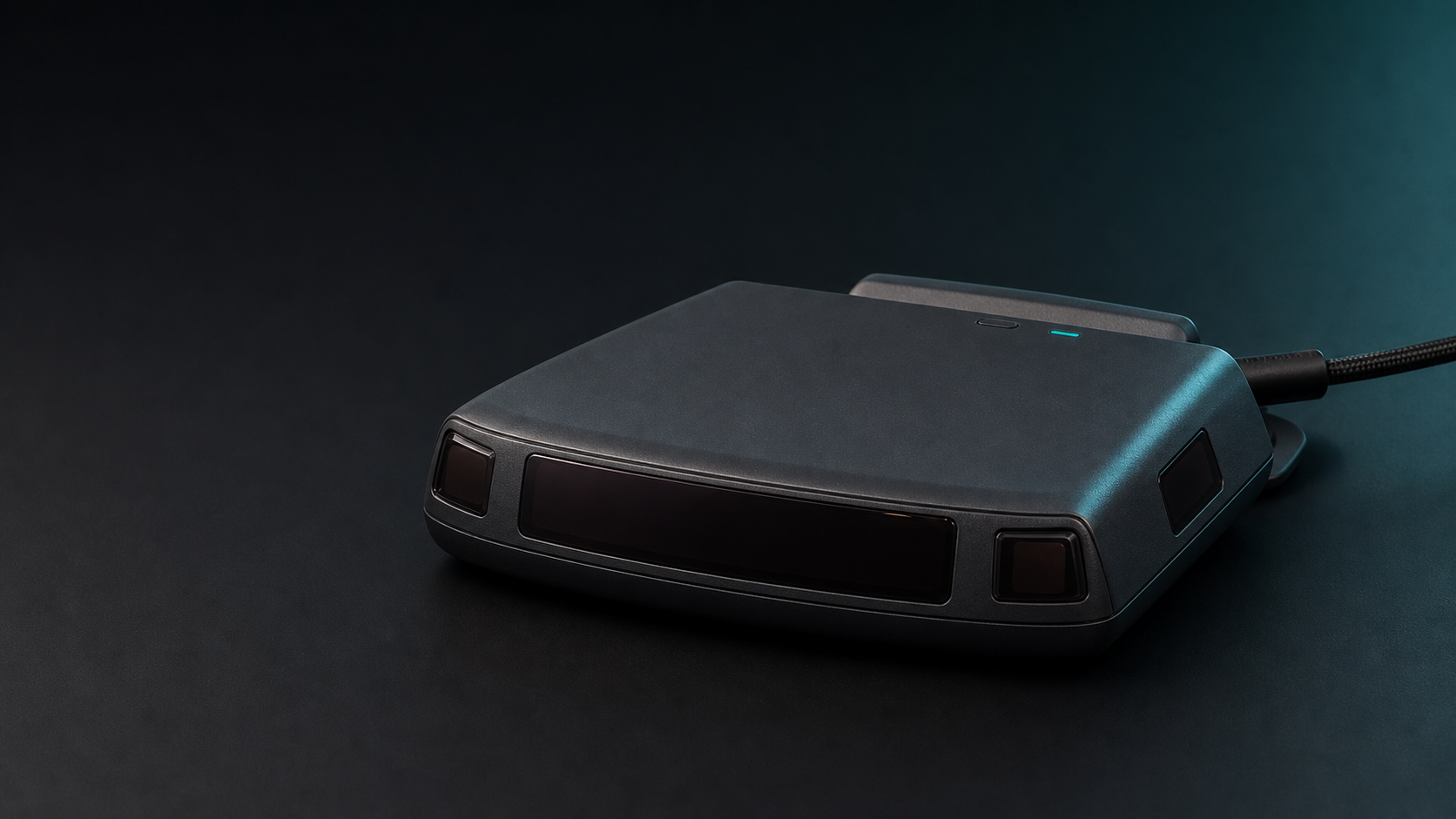
A consumer detector for where this is heading.
As roadside sensing moves beyond the license plate, awareness has to keep up. BanditKin Sentinel is a compact, receive-only USB-C accessory — in development and in-house testing — designed to flag supported roadside sensor activity and estimate a candidate source area, with visible uncertainty instead of false certainty. It doesn't jam, block, or identify any specific vendor from a signal; it helps you see and document what's around you.
See them. Then decide.
Camera locations are public data. Our free map shows every mapped ALPR camera near you — and which way each one faces, so you know which side of the road actually reads your plate. No account, no tracking, no paywall.

And when you want more than awareness: the BanditKin app can route around mapped cameras — an opt-in privacy preference, computed on your phone, that only detours when your path would actually cross a camera's field of view.
BanditKin is not affiliated with Flock Safety, Leonardo, any camera vendor, or any agency.
ALPR cameras, answered
What does an ALPR camera record?
Each read typically logs the plate number, a timestamp, the camera's location, and usually a photo of the vehicle with characteristics like make, color, and decals. One read is a data point; a network of reads is a movement history.
How long is ALPR data kept?
Commonly about 30 days by default, though retention varies by agency policy and vendor contract. Within that window, searches can reach across participating networks in other towns and states.
Do Flock cameras track phones?
Flock Safety's ALPR cameras photograph vehicles and plates. Capturing phone and wearable signals is a separate product — Leonardo's SignalTrace, an add-on for ALPR sites that fingerprints the wireless devices traveling with a car. Public reporting doesn't show it on the cameras this site maps; it shows where the industry is heading.
Can I see the ALPR cameras near me?
Yes — our free camera map shows mapped ALPR locations from public data (OpenStreetMap, the EFF Atlas of Surveillance, and community reports), including each camera's approximate viewing cone. No account needed.
Can I avoid ALPR cameras when I drive?
The BanditKin app offers opt-in “Avoid Flock” routing: it knows each mapped camera's approximate field of view and only detours when your route would actually pass through one — you set the strength, and if no camera-free route exists it falls back to the normal route. It's a privacy preference, computed on your phone.